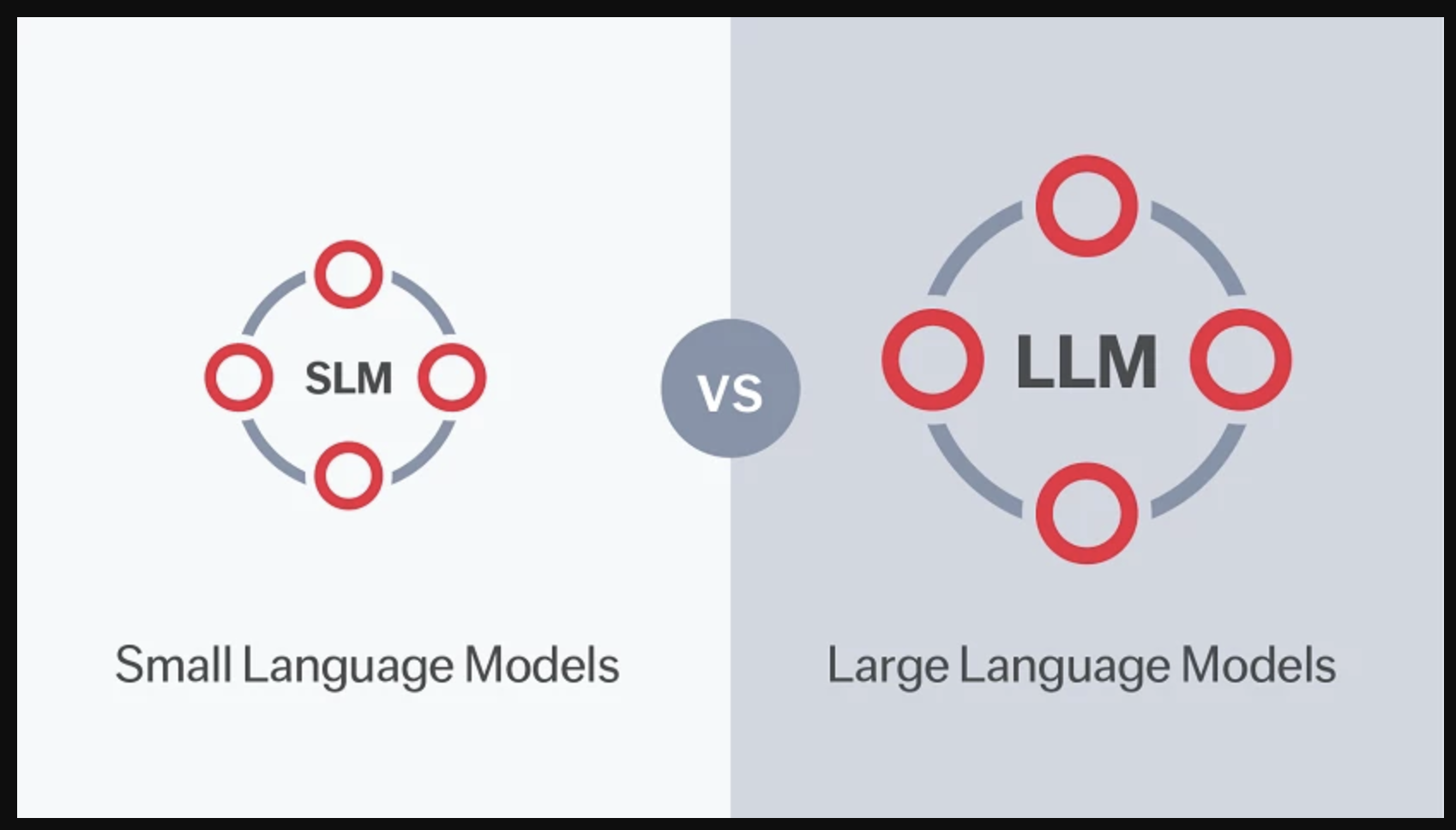
For the past few years, most conversations around Generative AI have followed a simple assumption:
Bigger models automatically lead to better AI products.
That assumption is now breaking down.
In real-world, production AI systems, especially workflow-driven, tool-heavy, and cost-sensitive ones -Small Language Models (SLMs) are consistently outperforming large language models in ways that actually matter.
By 2026, the most reliable AI systems will not be powered by the biggest models. They will be powered by the right-sized ones.
The Myth: Bigger Models Mean Better Systems
Large language models are exceptional at open-ended reasoning, creativity, and general knowledge tasks.
But most production AI workflows do not need creativity.
They need speed, predictability, structured outputs, and cost control.
When AI is embedded inside business workflows — approvals, support automation, data processing, internal tools — reliability matters far more than brilliance.
What Are Small Language Models (SLMs)?
Small Language Models typically range from about 1B to 7B parameters. They are usually instruction-tuned and often fine-tuned for specific tasks or domains.
SLMs are commonly used for:
- Workflow-based chat systems
- Tool calling and function execution
- Retrieval-Augmented Generation (RAG)
- Structured outputs such as JSON or forms
They are not weaker versions of large models. They are purpose-built specialists.
Why SLMs Win in Real-World Workflows
1. Latency Beats Intelligence in Production
In demos, response quality is everything.
In production, speed defines user experience.
A response in under half a second feels instant. A response that takes multiple seconds feels broken.
SLMs start faster, generate faster, and make real-time interactions possible. When AI becomes part of a workflow rather than a chat demo, latency matters more than raw reasoning power.
2. Determinism Beats Brilliance
Large models are probabilistic by nature. That is a feature for creativity, but a liability for workflows.
SLMs tend to:
- Follow instructions more strictly
- Produce cleaner and more consistent outputs
- Work better with schemas and guardrails
In production systems, consistency and predictability beat intelligence every single time.
3. Tool Calling Works Better with Smaller Models
Tool calling is not about deep reasoning. It is about identifying intent, selecting the correct tool, and passing valid parameters.
SLMs excel in this role because:
- Their reasoning paths are shorter and easier to control
- They hallucinate less when tightly scoped
- Failures are easier to debug and evaluate
In many real systems, SLMs act as better workflow orchestrators than larger models.
4. Cost Predictability Enables Scale
One of the hardest lessons in production GenAI is simple:
If you cannot predict cost, you cannot scale.
SLMs can run on CPUs or small GPUs, support local or on-device inference, and enable fixed or near-fixed inference costs.
This makes them ideal for enterprise workflows, privacy-sensitive systems, and high-volume internal tools.
SLMs do not just reduce cost — they unlock use cases that large models make impractical.
SLMs and RAG: A Strong Default Combination
Retrieval-Augmented Generation is not about deep reasoning. It is about retrieving the right context and responding faithfully to it.
SLMs work extremely well with RAG because they:
- Rely more heavily on provided context
- Hallucinate less when constrained
- Surface retrieval problems faster
If a RAG system fails with an SLM, the issue is almost always retrieval quality — not model intelligence. This makes SLM-based RAG systems easier to debug and improve.
Where Large Models Still Matter
Large language models are not disappearing.
They remain valuable when reasoning complexity is high, ambiguity dominates, or creativity is required.
The winning pattern in 2026 is not replacing large models, but orchestrating them.
The Real Shift: From Models to Systems
The future of Generative AI is not about choosing one perfect model.
It is about building systems:
- SLMs for workflows and execution
- Large models for complex reasoning when needed
- Retrieval for grounding
- Tools for action
- Evaluation for control
This shift moves GenAI from impressive demos to reliable, scalable systems.
Final Takeaway
Before choosing a model, ask a simple question:
What is the smallest model that can do this job reliably?
In 2026:
- Intelligence is cheap
- Reliability is rare
- Systems beat models
That is why Small Language Models are quietly winning real-world AI workflows.